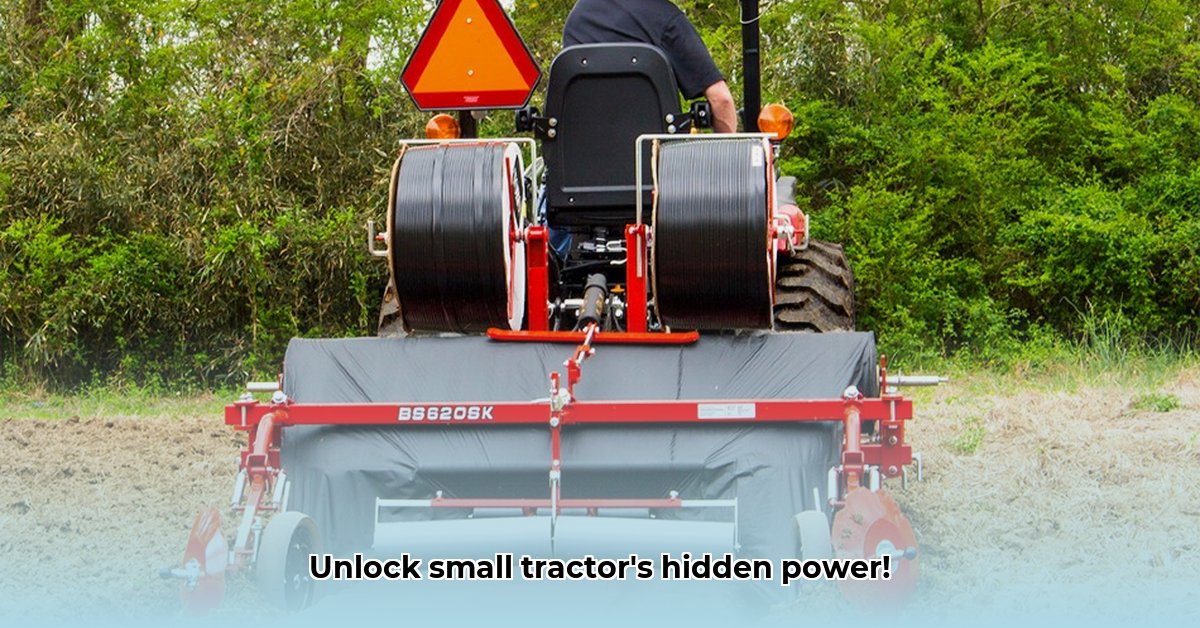
Choosing the Right 3-Point Attachments for Your Sustainable Farm
Selecting the right 3-point hitch attachments (tools that connect to your small tractor's three-point hitch) is crucial for efficient and sustainable farming. This guide helps you choose, use, and maintain these implements effectively, maximizing your farm's output while minimizing environmental impact. But first, let's assess your needs. For more information on cultivators, check out this helpful resource: small tractor cultivators.
Understanding Your Farming Operation: A Personalized Approach
Before you start shopping, take stock of your farm. What are your primary goals? Are you focused on soil health, reducing fuel consumption, minimizing your environmental footprint, or a combination of these? Consider your soil type (heavy clay, sandy loam, etc.) and farm size. These factors heavily influence your choices. For example, a small family farm might prioritize versatility and multi-purpose attachments, while a larger operation might need specialized equipment. Are you aiming for reduced-till or no-till farming? This greatly impacts the implements you should consider.
Exploring the World of 3-Point Attachments: A Comprehensive Overview
Many attachments work with your small tractor's 3-point hitch. Each excels at different tasks. Here's a breakdown:
Soil Preparation:
- Rotary Tillers: Excellent for seedbed preparation, but overuse can damage soil structure. Consider their impact on soil health before frequent use.
- Subsoilers: Loosen compacted soil, improving drainage and aeration. Ideal for heavy clay soils.
- Rippers: Break up hardpan (a compacted soil layer), promoting root growth. Beneficial for long-term soil health.
- Cultipackers: Firm the seedbed for optimal seed-to-soil contact; gentler on soil structure compared to tillers.
Planting: Various planters are available, from simple seed drills for small gardens to more advanced models for larger fields. Select one suitable for your specific seed type and planting method.
Weed Control and Soil Care: Cultivators manage weeds and improve soil aeration between rows, but their effectiveness varies depending on row spacing and weed type.
Harvesting: Tools vary greatly depending on your crop. Hay rakes, mowers, and small-scale harvesters are common examples.
Other Essential Attachments: Post hole diggers (ideal for fencing), loaders (for material handling), and snow blowers are also valuable additions depending on your needs and climate.
Rhetorical Question: Isn't choosing the right tools essential for a profitable and environmentally responsible farm?
Key Factors for Choosing Sustainable 3-Point Attachments
Several crucial factors influence your choice:
Compatibility: Ensure the attachment is compatible with your tractor's lifting capacity (weight limits) and 3-point hitch dimensions. Using an incompatible attachment can damage both the tractor and the implement.
Durability and Build Quality: Invest in sturdy, well-made attachments. High-quality implements promise longevity, saving you money in the long run.
Ease of Maintenance: Choose attachments that are easy to maintain and repair. Easy access to parts is a significant advantage.
Budget: Consider the total cost of ownership, including purchase price, maintenance, and lifespan. A more expensive but durable implement might be more cost-effective in the long term.
Quantifiable Fact: A well-maintained cultivator can significantly reduce weed growth, potentially saving you time and labor costs.
A Step-by-Step Guide to Attaching Your Implement
Attaching a 3-point implement is straightforward:
- Lower the Arms: Lower your tractor's lift arms to their lowest position.
- Align the Attachment: Carefully position the attachment's lower links on the tractor's lift arms, ensuring proper alignment.
- Secure the Top Link: Connect the top link to both the attachment and the tractor's top link bracket.
- Lift Carefully: Slowly raise the implement using the tractor's hydraulic lift. Avoid sudden movements.
- Fine-Tune: Make adjustments to ensure optimal performance.
Maintaining Your 3-Point Attachments: Tips for Efficiency and Longevity
Proper maintenance is crucial:
- Regular Cleaning: Keep your attachments clean to prevent rust and damage.
- Lubrication: Regularly lubricate moving parts to reduce wear and tear.
- Proper Storage: Store attachments in a dry, protected area to prevent damage.
- Follow Manufacturer's Instructions: Adhere to the manufacturer's guidelines for operation and maintenance.
- Safety First: Always prioritize safety. Wear appropriate safety gear, and operate tools with caution.
Expert Quote: "Regular maintenance is the key to maximizing the lifespan and efficiency of your 3-point attachments," says Dr. Emily Carter, Agricultural Engineer at Cornell University.
Sustainability Considerations: Minimizing Environmental Impact and Maximizing Resource Use
Sustainable farming practices are integral to preserving our environment. When selecting attachments, consider:
- Reduced or No-Till Farming: Prioritize implements that work with reduced-till or no-till methods, promoting soil health, reducing erosion, and improving water retention.
- Soil Health: Choose attachments that improve soil health metrics, like water infiltration rates and organic matter content.
- Fuel Efficiency: Select lighter implements needing less horsepower, reducing fuel consumption and your carbon footprint.
- Durability and Longevity: Invest in long-lasting, high-quality tools, minimizing waste and the need for frequent replacements.
Rhetorical Question: Doesn't sustainable farming prioritize soil health and resource efficiency?
This guide provides actionable steps towards sustainable farming with your small tractor. Remember that careful planning, selecting the right 3-point attachments, and diligent maintenance are key to a successful and environmentally responsible operation.